

Kansas City Market Deposit Rate Report
We deliver accurate, reliable, and up-to-date weekly insights that help financial institutions make informed decisions and stay competitive in a dynamic banking landscape. Surveyed every Wednesday.
We track the rates. You make the moves.
Only $95 Per Month
Billed Annually $1,140
Less Research Time
More Institutions
Current Promotions

What Our Reports Include
- 46
Total Institutions*
- 42
Banks
- 4
Credit Unions
- Weekly
Reports
- Thu
Delivery Day
Savings Interest Rates
Money Market Interest Rates
Certificate of Deposit (CD) Interest Rates
*Number of Institutions may vary as we continually update the markets.
Market Highlights
Our Reach
The Kansas City Metropolitan Area Deposit Rate report includes the following states and counties.
States
- Missouri
- Kansas
Counties
- Cass (MO)
- Clay (MO)
- Jackson (MO)
- Johnson (KS)
- Platte (MO)
- Wyandotte (KS)
Proven and Trusted
Kansas City Deposit Rate Report
At BancAnalytics, we specialize in delivering accurate, research-driven insights into deposit interest rates (annual percentage yields/APY) nationwide. Our team conducts comprehensive surveys of bank rates weekly for personal savings account rates, money market account rates, and CD rates. Our in-depth data analysis helps financial institutions stay competitive in their local markets. Whether you want the top savings accounts in your market or simply know your competitor rates, our reports will help you set your deposit pricing based on the current rates. By combining trusted rate research with real-time banking data, BancAnalytics empowers banks and credit unions to make informed pricing decisions that drive growth and customer loyalty.
And, the Money Monitor Deposit Rate Reports are now online! Whether you need customized market reports or ongoing monitoring of the Kansas City, Missouri bank rates, our approach ensures you always have a clear view of where your institution stands in today’s dynamic deposit landscape.

Questions About This Report?
Don’t hesitate to reach. Our team is happy to help make sure this report is right for you.
Save Time & Get More Business Intel
Start getting competitive intelligence on your most important products today!
Interesting Banking Facts
Banking History in Kansas City, Missouri
When the smoke of the Civil War cleared, a new kind of frontier began to take shape along the banks of the Missouri River. Kansas City was still rough around the edges, but opportunity buzzed through its muddy streets. Cattle, railroads, and riverboats carried more than just goods — they carried ambition. And ambition needed a banker.
In 1865, as the city’s first trains whistled across the plains, the Kansas City Savings Association opened its doors. It wasn’t much at first — a small operation serving merchants and settlers — but it planted the seed for something much larger. Under the leadership of Dr. William Stone Woods, it would grow into the National Bank of Commerce, the first real financial powerhouse of the region.
By the late 1800s, money flowed into Kansas City as fast as cattle came through the stockyards. Banks sprouted across downtown: First National, Armour Brothers, Midland National — each financing a different piece of the city’s booming economy. Grain, steel, rail, and meatpacking all ran through their ledgers. Kansas City was no longer just a stop between St. Louis and Denver — it was becoming the financial heart of the Midwest.
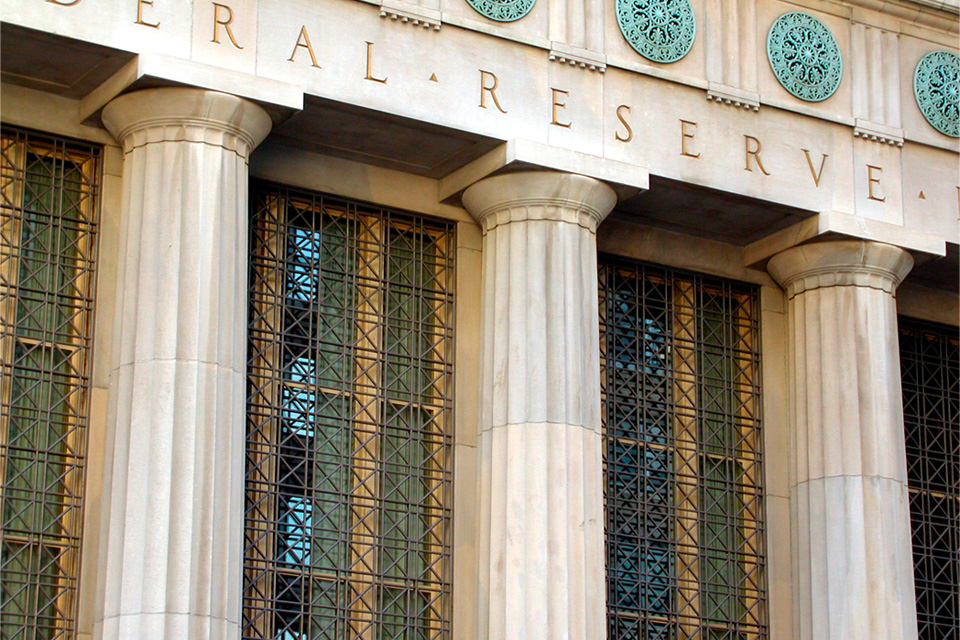
Then came 1914, a defining year. When Congress created the Federal Reserve System, Kansas City was chosen as one of just twelve Federal Reserve Bank cities in America. It was official: Kansas City was on the financial map. The Federal Reserve Bank of Kansas City (10th District) opened its doors downtown, solidifying the city’s status as a regional banking capital.
Meanwhile, the Kemper family was weaving its way into the city’s banking DNA. Their stewardship of Commerce Bank and UMB Bank helped shape modern banking in the Midwest. The elegant Commerce Trust Building, built in 1907, still stands as a monument to that golden era — a reminder that finance was not only about money, but also about confidence and permanence.
Through booms and busts — from the Panic of 1893 to the Great Depression — Kansas City’s banks adapted, merged, and rebuilt. They financed farms, factories, and families through war and peace, growth and recession. And they helped the region recover again and again.
Not all of the city’s banking history was written in marble halls, though. In the early 20th century, African American entrepreneurs also built institutions that served customers overlooked by mainstream banks. Their work laid the groundwork for ongoing conversations about equity and opportunity — themes the Kansas City Federal Reserve continues to explore today.
Today, the city’s skyline tells the story: the Federal Reserve Bank’s modern headquarters gleaming on one end, the historic Commerce and UMB buildings anchoring the other. Together, they mark a journey that began with a single savings association and grew into a legacy of resilience, innovation, and trust. Kansas City didn’t just build banks. It built belief in a future worth investing in!